 Notes by
The book in a minute
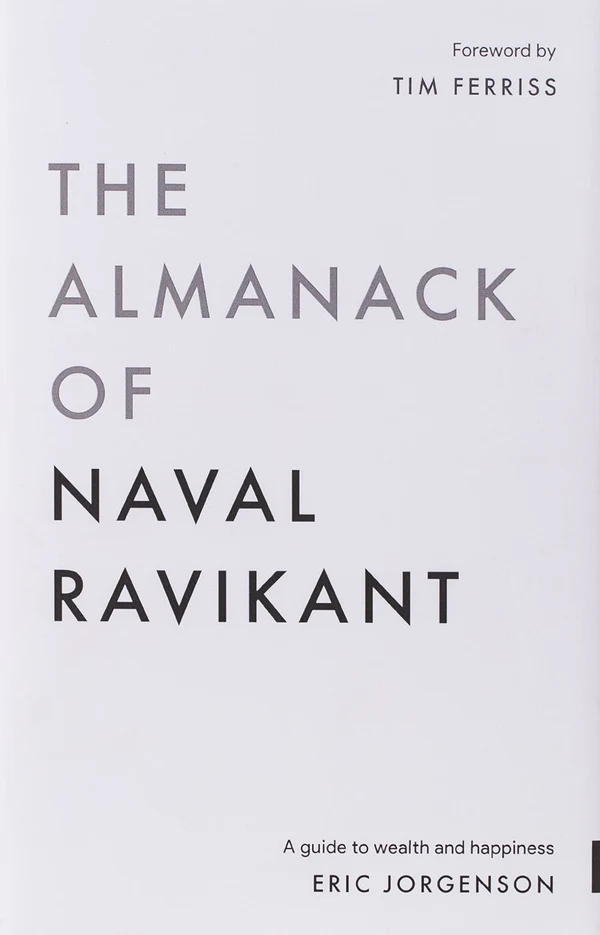
The Almanack of Naval Ravikant is not a book Naval sat down to write. Eric Jorgenson gathered his tweets, essays and podcast answers and arranged them into one short guide. Naval is the cofounder of AngelList and an investor in many startups.
The first half is about wealth: what it is, why it comes from ownership rather than hourly pay, and the ideas that matter most to get there: specific knowledge, leverage, accountability and judgement.
The second half is about happiness, health and how to live. Naval treats happiness as a skill you can practise. The whole book is free to read online, with print editions for anyone who wants a copy.
Four reasons it earns your time
Short and dense
You can finish it in an evening and keep coming back to it. Almost every page stands on its own.
A clear way to think about wealth
It separates wealth from money and status, and explains why ownership beats hourly pay. Useful when you are deciding how much equity to keep.
Leverage, explained plainly
Labour, capital, and code and media. Most founders use the first two and underuse the third.
More than a business book
The second half, on happiness and judgement, is what makes it worth rereading.
Eight lessons for founders
Seek wealth, not money or status
Naval defines wealth as assets that earn while you sleep: a business, equity, code or content. Money is how you move wealth around. Status is a ranking someone else controls.
Build specific knowledge
Specific knowledge is what you know that cannot be taught in a classroom. It usually grows out of real curiosity, so it feels like play to you and like work to others.
Use the right leverage
There are three kinds: labour, capital, and products that cost nothing to copy, like code and media. The first two need someone's permission. Code and media do not.
Take accountability
Put your name on the work. Taking the risk in public is what earns you the upside, and the trust that comes with it.
Play long games with long term people
Returns in wealth, relationships and knowledge come from compounding. That only works when you keep working with the same good people for years.
Judgement is the multiplier
With leverage, one good decision is worth more than months of hard work. Clear thinking, built from reading and first principles, is what sharpens judgement.
Read what you love
Naval's advice is to read what you love until you love to read. A reading habit is the base everything else is built on.
Happiness is a skill
He treats peace of mind as something you practise, through habits, fewer desires and choosing what to pay attention to.
Only one needs no permission
Source: The Almanack of Naval Ravikant, Eric Jorgenson (2020)
Read it or skip it
You are deciding what to build next and want a clear way to think about it.
You want a short book you can finish in one sitting.
You care about staying sane while building a company.
You want a step by step playbook. This is a collection of ideas, not a manual.
You know Naval's How to Get Rich thread well. The first half will feel familiar.
About The Almanack of Naval Ravikant
Is The Almanack of Naval Ravikant free?
Yes. The full book is free to read online and to download as an ebook from navalmanack.com. Print and Kindle editions are also sold.
Who wrote The Almanack of Naval Ravikant?
Eric Jorgenson compiled it from Naval Ravikant's tweets, essays and interviews. Tim Ferriss wrote the foreword. It was first published in 2020.
What is the main lesson of the book?
Build wealth through specific knowledge, leverage and accountability, and treat happiness as a skill you can learn.
Is it useful for startup founders?
Yes. The ideas on equity, leverage, judgement and long term relationships map directly onto building and funding a company.
Keep reading
The founder origin story that actually matters
Not where you went to school. The moment you collided with this problem and couldn’t let it go.
17 November 2023ReadConviction is a posture before it’s a number
It shows up in how you hold a pause and answer the hard question. Investors read it in seconds.
22 February 2024ReadHow much to raise: the math founders get wrong
Ask too little and you’re back in the market in nine months from weakness. Work backwards from the milestone.
5 January 2025ReadSend me your deck
I have built decks and models for 2,000+ founders. Book a call and we will go through yours slide by slide.